Tuesday, June 26, 2007

industrial consumerism

When I am overcome by the desire to own something, it is almost always an industrial, not a consumer product. I think this may be the product of too many William Gibson novels in my youth-- the idea that sparsely designed, no-frills tools are superior to the chaff sprinkled on the common people. So, when we were talking about kitchens, I got excited by the 300,000 BTU 10-burner superranges at Surfas. I can spend hours looking at foam rubber and vapor-tight light fixtures at McMaster-Carr. It's even influenced my choice of offices-- I am thrilled that I get to work with a factory every day.


My latest obsession is from ISO. Yes, the International Standards Organization. Yes, the people that brought you such blockbusters as "ISO 22000: Food Safety Management Systems" and "ISO 14000: GHG emissions accounting and verification." What has me all hot and bothered, however, is ISO 7000: graphical symbols.


For a little over $200 (paid in Swiss Francs, natch), you can get over 2,400 fantastic standard icons, from the seat belt symbol, to low tire pressure, to the ever-popular "lightning-bolt" danger triangle, in several formats! Think of all of the uses-- someone at my office already suggested a machine that prints a different icon-based t-shirt every day, for six and a half years.


I'm saving up.

Thursday, June 21, 2007

move to bejing? $2000

I've mentioned before that it often seems like the future is already here, it's just looks to boring to be noticed. Seabox is a custom container company that makes the current mobile-design architects look like kids in a sandbox.


This may not look like much, but here's the description:
In the closed configuration, the structure meets all the ISO requirements for transportation on a container ship. Once on site, the Folding House can be set up in about one day. Custom designs and materials are also available.
For those of you that are a little more impatient, there's a version that involves a tentlike configuration that can be unfolded in under 20 minutes. Or if you desire the bad-ass over the expedient, go with one of these:


Here we have an open-frame, stackable "ratpac" system with reconfigurable exterior and interior partition walls, capable of pretty daring cantilevers. It was designed as a system for SWAT urban warfare training. Check out the shiny interiors:


Sinister and kick ass.
For something more heartwarming, try this:


Oh, just a portable standing wave generator. Shippable, of course. There are also portable workshops:

And, of course, you could just hire them to make impromptu ziggurats and 100 foot walls, on demand--here's a temporary outdoor movie screen in Central Park:

And, of course, the requisite art opening monoliths:


These guys will design for you a 40' container with integral generator and A/C unit, built-in furniture and even a little plumbing. And since everything still meets ISO code for international shipping, you can ship your house at the going rates (currently, about anywhere in the world for $3000 or under. And China is especially cheap). For a harder sell, check out this video.

I'm going to petition Seabox to change their motto to "Up Yours, Lo-tek."

Tuesday, June 19, 2007

gardening architecture


[All images taken from the reference library blog. While I'm not sure the "quality" the writer is searching for is quite as ineffable as he makes it out to be, the site has a fantastically even feel.]


There is an often unacknowledged side to biomimicry that I feel might be as interesting a consequence as the possible responsive and regenerative aspects that are much talked about. These buildings will age.


Your house could get hot flashes and headaches. Your school would slowly weather into a softer, less resiliant, slower form. The subway station would forget things. With the modernist concept of a priori materiality repaced with mutable,ageable substances, one's relationship with buildings would transition from detached viewer to constant caregiver and maintainer. If we build like trees, we must prepare to be the gardeners of our structures.


I'm just hoping that my house doesn't get chronic headaches or a predisposition to the yearly flu.

Monday, June 18, 2007

two views on global warming


Inaba projects has made a verifiably fantastic video (available on YouTube) forecasting a gently totalitarian, evolving, regenerative urban future. The title, "Moore's Law Meets Sustainability," should give you a teaser of it's unbridled positivism. This relentless, mechanistic optimism could have easily derailed the video, but it is just creepy and unreal enough to inspire rather than pacify.

On the other end of the spectrum, the City of Santa Cruz provides us with a powerpoint presentation entitled "Turning the Tide." Buried within the promises to cut emissions and provide more greenspace, which (to me) only highlight the issues of attempting local solutions for a global problem, is the following slide:


This list can be seen as histrionic and alarmist by some (100 year flood levels, widespread drought, etc etc), but I actually found it to be comforting: here is the end result on urbanism in a few decades if we can't manage to turn around world trends in industrial pollution and unbridled waste-- desalinization plants, levees and dikes, and-- as was suggested in a recent NYT article -- urban shorelines that look more and more like Venice or Amsterdam.

I am somewhat reminded what I was once told on a tour of Prague, that centuries of debris had made the former first floors of many old buildings into the basements. I can only imagine, if the worst-case scenarios for ocean levels come true in fifty years, that some localities might choose canals and waterlogged first floors over losing long-held property. How do property rights fit in when the shoreline moves 200 feet inland in a decade?

Thursday, June 14, 2007

march starch?


One of the localised weather phenomena that I had to get used to, alonside the Santa Anas and "fire season", is the fact that most of the early summer here is cloudy. Not just a little cloudy. End-of the world cloudy.


They give it cute names like "May Grey" and "June Gloom," but the fact is, if you live and work west of Overland Avenue (such as I do), you get pretty depressed this time of year. And it doesn't even rain-- these are angry, but impotent clouds.


It's as if, for the few months of the year the rest of the country is having clear weather, southern California is forced to borrow their clouds, and store them in the first few miles of land next to the Pacific, for use later in the fall.

Wednesday, June 13, 2007

my line

Doulas Tomkins, the man who brought us North Face, allowing us to have wonderfully warm clothing that was either fuzzy on the outside, or makes little zip-zip-zip noises when you move, has been buying land in South America, piece by piece, as a private ecological preserve. At last count, he owns around a million acres in Argentina and Chile.

This is something like .15% of these two countries combined. This may seem small, but it is also over 1500 square miles, much of it in a long skinny squath about 35 miles across, next to the ocean. So there is a wee bit of controversy, not only for reasons of access, but because the land also happens to be on top of a very large resivoir.

All of this aside, I wonder what it would be like if someone purchased a long, skinny piece of, say, Utah, piece by piece, until they had bisected the state completely. All of a sudden, you would have a new datum, a Mason-Dixon line of the 21st century. Not to mention that you could now feel free to start a whole series of linear enterprises, from a linear accelerators to speedways for land-speed records, and, maybe, in the future, magnetic space launch facilities.


UPDATE: speaking of strategic reserves in the desert, this just appeared on archinect.

Monday, June 11, 2007

for your consideration...


... Tony Garnier's Prix de Rome-winning "project for a national bank", of 1899. Image lifted from "Theory and Design in the First Machine Age", in which Banham notes the embarassment "young progressive architects" had explaining how such a formalistic, nonfunctional plan could win a trip to Italy. To get a sense of the
scale, check out the tiny conference tables in the lower third. There were no sections or elevations in the submission.

I almost wish that this had been built, leveling some declared "slum-ridden" portion of Paris in the early part of the last century. Over the years, it would decay and the maintenance costs would skyrocket, until 100 years later (perhaps today), Parisians would decide that the only recourse would be to remove all of the windows and make an enormous enclosed city park, much as they did with some slaughterhouses a few decades back. A now-acclaimed losing entry from that competition would be revived and the marble halls meant originally only for "monumental circulation" would be reinterpreted as badminton courts, skating rinks, and art galleries (and, of course, a boulodrome). The collonades provide perfect goalposts, and the main banking room would become a quasi-open air cafe from which one could watch sumptuous anarchy unfolding in every direction.

Thursday, June 07, 2007

mp3 copout: audiosports

Softball today. All I have to show for my efforts this time is a left thumb that looks like a link sausage. Therefore, today's unearthed audio file is of me kicking ass at a perhaps slightly less athletic sport: boules (or petanque, if you're snooty about it):


Wednesday, June 06, 2007

hydrocarbon atlantis

[Chris Jordan makes fantastic images of sifted waste. I can't help but imagine Scrooge McDuck swimming in this pile of cellphones.]

Yesterday, I found out (thanks to BLDGBLOG) that Shell Oil Plans to create 1,700 ft high walls of ice in shale under the Rocky Mountains. This is to prevent groundwater contamination when they pump 800 billion gallons of crude sequestered in Colorado, Wyoming and Montana.

Today, NY Magazine told me about a much smaller oil deposit -- only in the range of 30 million gallons -- that is notable because a) it sits in the middle of Brooklyn, and b) it is manmade (thanks, Mobil!). BLDGBLOG made a quick notice of this one as well.

This oil is going to be massively expensive to recover, and it's not crude but an amalgam of decayed motor oil, benzene and other lovely poisons, but all the same, how long is it going to be before we start mining our own waste? Thanks to microelectronics, there is a higher concentration of gold in some landfills than in many mines. The only problem is that current recovery methods would be as destructive and messing as strip-and-leach mining already is; in other words, we'd just be making a lovely soup out of our trash and sucking up what we like. Kind of makes me think that the real action of much of industry is to select and purify specific, rare materials, make intricate weavings of these threads of pure stuff, and then pulverize these assemblies and scatter them into a giant pit.

Tuesday, June 05, 2007

total control

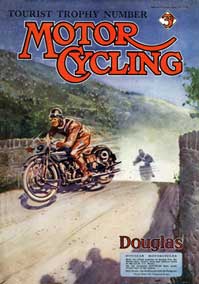
The Isle of Man TT Race turned one hundred last weekend.


The thirty-seven mile circumference of this island, located between England and Ireland, is completed in about seventeen and a half minutes, by motorcyclists, frequently exceeding 150 miles an hour. The world record lap time features an average speed of 129.451 mph.


The villages along the race path are often transited in only a few seconds. For the entire day of the race, motor traffic is shut down, and over 600 volunteers are placed in a continuous line of sight along the entire course. In this way, the entire 37 mile journey is witnessed and protected, not unlike that of Xiang Xiang, the panda whose "return to the wild" was recorded in minute detail until her death.


In the past century the Isle of Man TT has claimed 226 lives. At current speeds, in the two-lap race, this is a death every 15 minutes. To add to this insanity of velocity, there is the annual "Mad Sunday" in which any member of the public can run the 1300 foot mountain section of the course. To those of you that wonder what this might have to do with architecture, may Marinetti visit you in your sleep (as the ghost of futurism's past, of course), crashing ancient motor cars into your dreams.

(All images courtesy of Wikipedia.)

Monday, June 04, 2007

fris-being


Went to the season opener for Sam's summer-league ultimate team (go blue!). They won, of course, and we also got to dig out and play with my over-powered pre-digital flash from high school. Dragging the shutter is the coolest.

Friday, June 01, 2007

virtual provence

Continuing on my perusal of old recordings.

To go here:

Look at this:


While listening to this:


Thursday, May 31, 2007

now back to our regular programming (dreamsketch 3)

But first, a brief moment of silence for new beginnings.


Dreamsketch 3: alcove with light panel.
(the most hastily and blearily composed to date)

Here we have, at the ceiling of an unfathomably cavernous space, a narrow, long alcove hidden behind sliding frosted glass doors, in which there are a few concrete benches and a panel emitting a sodium-lamp orange shade of light. The air is hot, still, and tinged with ozone. There is a dry stifling wind in the open space beyond. There is no sunlight.

Sunday, May 27, 2007

weekend copout: audio edition

Came across this old field recording from my brief stint abroad and thought I should share it. I remember the guy playing guitar in the background being obnoxious at the time but given some distance the music seems perfect. Bonus 10 points if you can tell me what the people to my left are talking about.

Friday, May 25, 2007

maybe they should have tried an oil-based product

Jean long ago sent me the thrillingly titled "Transportation and Urban Development in Houston, 1830-1980," written by Peter Papademetriou of the Houston Metro. Thank you, Jean. I just went back through it and read the really early parts, and I have a passage to share with you:

As a result of [expanding] commercial traffic, early improvements in transportation facilities were undertaken by private businessmen... in 1850 a group of merchants [including William Marsh Rice] formed the Houston Plank Road Company, a plan to construct a road of two-inch oak or three-inch pine planks. However, growing interest in the railroads led to cancellation of the project and through the 1870's even the streets in the town of Houston itself remained dirt, except for an ill-fated shell paving project of 1858 which contributed to the phenomenon of dust rising in clouds, a complementary nuisance to the mud which otherwise plagued city residents. (p.7)

It's tempting to imagine wooden highways stretching as far as the eye can see, met by offramps white with conchs and cowries. The reality is absent or, in any case, far less compelling, but it does make one salient point-- the technologies we use for paving are not self-evident or even necessarily the best. We tried wood and calcite, and then concrete and asphalt somehow stuck. But when the overpasses start crumbling, maybe they'll get replaced by stabilized earth, or close-mowed turf, or piezoelectric thermoplastics. If we're supposed to imagine jetpacks and spaceports, why shouldn't the surface under our feet undergo the same prospective futurity?

Wednesday, May 23, 2007

Ginsu Rudolph


So another Paul Rudolph house is threatened with demolition. The owners still claim to love it, but it's just not big enough for them any more. Apparently they've gotten much larger over the years. But this time, two men come to the rescue, cutting it precisely in half, trimming off three inches so it will fit on some trucks and removing it from its beachfront location to some ex- summer camp in the mountains.

Now, there are lots of sides to take in this story, from a simple congratulatory stance to disappointment to appreciation of the surreality of making a building exactly three inches shorter and completely removing it from context. These are all valid positions and emotions, but what each instance of this kind of story brings up to me is what provides the value in residential architecture. Many famous residential structures were never homes to begin with-- they were "pavilions." And other ones (the Glass House, pretty much everything by Corbusier) now exist mainly as an odd combination of personal monument, history museum, and technological archive. But what about those famous homes that people stubbornly insist on still using as domiciles? Aren't they producing their own kind of domestic value? If a famous house becomes a museum, has it succeeded or failed?

Rudolph, like Lautner, is a good test case for this stuff because, in the midst of the architectural expression, all of this complex geometry and rhythm of line, there was a genuine interest in the domesticity of the space itself. Rudolph himself once said that a famous tensioned-roof lakehouse he designed was a failure because the reverse bow to the roof made the spaces look outward, and houses should always look in on themselves, on the hearth. I don't want to sound too nostalgic here, but what paradigm-defining offices operating today are trying to simultaneously push the boundaries of practice while also developing and satisfying a genuine interest in the lives and home-spaces of their clients? I kind of feel that at some point, while being taught the history of modern architecture through the Villa, we forgot that people used to live in these houses.

Tuesday, May 22, 2007

deconstricting

Went to our favorite beach again today, and on the way back, I realized that another reason I like the beach so much is that the drive there takes you through the Ballona wetlands.


This area has fortunately been protected from development, and exists as an immense marshy plain, bisected by Playa Vista road, and bordered by the marina, cliffs, the 90 overpass, and the hideously ugly 40-foot wall of the Playa Del Rey lofts. With the condo towers of Marina Del Rey like foothills in the distance, it's like having a scale model of the original valley in your own backyard. As can be seen above this swath of negative space is oriented such that it collects the sunsets every day, washing its interior with smog-enhanced reds and oranges. Somewhere between the waterlogged ground plane, the sulfuric sky full of pelicans, the immense void and a single road both scenic and free of traffic, a uniquely local public space has collected. It is primarily a vital component of the local ecosystem, but with all of the fencing and culverts helping the wetlands to regain a foothold and build in biodiversity, I prefer to think of it as a gigantic piece of land art, LA's own Smithson. A bird/plant/amphibian/sunlight collecter for the West Side.

Monday, May 21, 2007

two los angeles

When I first heard about cityLAB, Dana Cuff and Robert Sherman's urban futures research program at UCLA, it took me almost a year until I actually went to their website and looked at the work, today. Not knowing the work of either person, I was expecting some well researched but MOR urban solutions-- streetscape improvement, transportation solutions, you know the drill.


What I found was so much more. Two of their projects in particular, LA2016 and PropX: lessons learned, are a delirious combination of projective urbanism and dystopian realism that manages not to flinch away from the big decisions while refusing to mediate between poles. It is sustainable without being green, specific without being perscriptive and comprehensive without being totalitarian. The work frequently toes the line between solution and dystopia, and dances around the difficult questions by posing its own, better ones. It may sound from this description that I love their work. A more accurate description is that I am terrified by it.


Inverted pyramid megastructures above the freeways, inhabitable beach mutations, and postapocalyptic tract housing inhabited by the last existing motorheads-- sometimes it's more exciting than realistic, but we have plenty of realistic urbanisms, thank you. So, all I have to say, is take a look at it, and laugh, promote, or recoil in horror. I think they're looking for all three of those reactions.


___

On the other end of the spectrum, also strangely compelling for entirely different reasons, is the UCLA Urban Simulation Team. This group is dedicated to making a rediculously detailed 3d model of, well, all of Los Angleles. "The model is accurate enough for the graffiti on the walls and signs in the windows to be legible."


These models, built on top of the 3d GIS surveys, are intended for use by urban planners, emergency response teams, transportation planners, and, in a slightly more sinister fashion, security consultants. More interestingly, they claim that "this system is being extended to support a client server capability which will allow the seamless interactive navigation of the entire Virtual Los Angeles Model... while simultaneously supporting hundreds of remote interactive users."


So what do we have here? An accurate, detailed, comprehensive 3d model of one of the largest cities in the world, that can be used simultaneously by many people in real-time. I think sometimes the future creeps up on us because the websites look boring. I'll leave it up to you to imagine what you most want done with this waiting terabyte of virtual city, but personally I'm starting my Godzilla model tomorrow.

Sunday, May 20, 2007

a single tear

My readership of the New York Times is sometimes challenged by articles, usually ones in the House and Home section, or Style, or this time, in Travel, where an article just appeared about the tribulations of the second home.

(emphasis added):

“The vegetable garden — the production of too many vegetables, and the guilt of not eating them,” said Susan E. Bell, a paleontologist from New York City, who with her husband, Byron, an architect, owns a house he designed in Woodstock, N.Y. “And then, of course, all the effort it takes to persuade the house guests to take the vegetables with them. And then the guilt if you don’t have house guests: you feel guilty not to be sharing your house with your friends, who are stuck in the city.”

Do the Bells, like so many others, eventually want to retire to their weekend house, which is on 50 acres between two waterfalls and has 96 windows, some of them unwashed since it was built? “Oh, no,” Mr. Bell said. “We want to retire to New York City — and relax!”


I am convinced that many of the life-style writers at the NYT just make up people when they need anecdotes. This, in my world, does not exist. There are no paleontologists with 50 acre compounds in Woodstock, and they certainly don't complain about their largesse if they do exist. This sort of interview creates some kind of freakish magnetic affect that makes me want to go back to NY while still avoiding it completely.

Saturday, May 19, 2007

ricardo is my fave

There's a new article in Metropolis online in the "speak truth to power" category. And while I agree with most of the (rather broad) formulations--the most famous does not equate with the most talented, iconic buildings are often one-dimensional-- I really can't rally behind the whole argument.

First off, the article seems to be equates "starchitecture" with theory-driven unbuilt work, which seems to me to be patently untrue. The most recognisable architects of the moment, Gehry and Liebskind,have been spending the last decade (or at least the last five years)building continuously and steadily. And while I appreciate a trulycritical review of theICA Boston, I don't think that Diller Scofidio + Renfrocan really be fit into the star category, no matter how you shove. Maybe among students and critics, but certainly not the general populace.

I also think it's somewhat backhanded to say the building is slapdash or hackneyed-- this is an enormously complex project that pushes the boundaries in a number of ways (especially for
Boston). In addition, an even cursory perusal ofDS+R's work would point to the fact that this firm actuallyhas a rather deep understanding of the way buildings work on an urban scale; whatever problems the street front of this building has, to simply attribute it universally to the fame of the firm in general is the kind of lazy criticism the article started out fighting against. It
seems to me that perhaps this particular critic doesn't like a)Starchitects or b)Conceptulaized practice, and is attempting to conflate the two to kill two birds with one stone.

An one last note-- any kind of blanket criticism of work by any firm based upon it's fame inside or outside the profession ignores a very important fact-- these offices are chock-full of the smartest graduates from the best schools in the last five years. They'revertiable hives of budding archigenious. Despite the failings of any particular Gehry or OMA project, there is usually a shocking amount of good idea per square yard, if you look closely enough. In my opinion, the mediocrity ofstarchitecture is less often due to the ego of the principal* and more often the result of a combination of incredible complexity of program, high expectations, and too much importance placed upon iconic status or innovation for innovation's sake. Such buildings become overworked or hackneyed because of all of the attention paid, not despite it.

*Unless your first name is Zaha or your last name is Nouvel.

Thursday, May 17, 2007

all things considered would never consider me

A (selected) list of names to prove why I could never be an announcer or host on any NPR program, local or national (nasal voice and stutter aside.)

Marin Alsop
Karen Grigsby Bates
Kajon Cermak
Thea Chaloner
Farai Chideva
Andrei Codrescu
Korva Coleman
E.J. Dionne
Mandalit del Barco
Priya Finnemore
Corey Flintoff
David Folkenflik
Lourdes Garcia-Navarro
Tre Giles
Tom Gjelten
Vertamae Grosvenor
Charlayne Hunter-Gault
Danyell Irby
Ina Jaffe
Xeni Jardin
Sasha Khoka
Soraya Sarhaddi Nelson
Vy Pham
Ofeibea Quist-Arcton
Guy Raz
Kai Risdahl
Cokie Roberts
Lakshmi Singh
JC Swiatek
Neda Ulaby
Nick van der Kolk
Doualy Xaykaothao
John Ydstie
Daniel Zwerdling

I am afraid that my name is simply too boring.

Wednesday, May 16, 2007

pt 2

I thought that post was a little lame so here's some augmentation:

The NYTimes graphic department has done another fantastic job, this time describing the new supercollider in Europe. I say "Europe," because the tunnel, 300 feet down and nearly 17 miles in circumfrence, goes beneath both France and Switzerland. It's the Twin Cities of subatomic particles. It's funny, what with the "primordial fire", acceleration to the speed of light, and 7000-ton cameras, what I'm most impressed by is the idea of a 17 mile underground circle. Makes me want to go for a run-- who wants to be in the supercollider half marathon? You start with your backs facing, pass each other once, and end with a photo-collision finish.

myspace mccluhan

I'm kind of surprised that nobody has yet written a popular analysis of what different social networking sites say about our relationship to different creative media. So I'm going to attempt an off-the-cuff index, right now (in order of the complexity of involved technology):

text: people apparently find it the most natural to either produce public journals, or convey in a viral fashion tiny bits of social information. Not much fiction, not much strict journalism, but a whole lot in-between.

photos: once again, not a terribly surprising outcome: most of the action is in the form of complusive indexing, sharing, and commenting. One interesting note is that the division between pro and amateur is blurring, as home operators get flashier websites and pros start making "high-caste" flickr groups. You don't see Michael Gondry posting on YouTube.

visual art: other than websites themselves, the bulk of popular graphic design appears to be in the Clever T-Shirt area. Go fig.

audio: the "podcast revolution" hasn't exactly exploded-- i think everyone underestimated how difficult it is to write, perform, and edit an entertaining and cohesive audio narrative. In addition to the more prosaic mp3 blog concept, a more interesting phenomenon is the almost immediate and universal adoption of MySpace by performers, remixers, and fans. There were many previous attempts to make a social networking site specifically for performers and bands, but what this ignored is that there's no reason to have a presence if you can't contact the people who buy your records.

and, video: was anyone else surprised that there is more collective national skill in editing video than audio or writing? YouTube does have a soft core of crappy-resolution digicam videos, but the outer shell is finely-crafted amateur commercials, shorts, and music videos. I guess it shouldn't be that shocking-- my generation's favorite childhood toy might have been the parent's video camera. How many tons of magnetic tape have been used to immotalize 1980's puppet shows and child-auteur plays?

The only quick conclusion I can draw from all of this is that media are not interchangable, and that some are more naturally social. Text is probably at the bottom of the barbaric yawp list right now, actually, superceded by the flickr photoset-- probably from the temptation of the biggest vacation slideshow ever made. There's also the wonderful fiction of objectivity created by an image. So you heard it here, folks-- if you have something to say to 10 million strangers, say it with a picture. Or even better, a moving picture. It'll last longer.

Tuesday, May 15, 2007

tuesday cop out


Full story here.

Monday, May 14, 2007

ways to understand a song is your new favorite song

You hear the last 30 seconds on the radio, after which there are three more, worse songs. The DJ then comes on and either manages to avoid naming the fantastic song, or mumbles it, or dies midsyllable. This is without fail.

You hear it at a friend's house, low in the background, and they notice your attention drifting to the stereo, turn it up, and tell you how awesome it is.

You make it to the record store once in a blue moon, pick an album based on the cover art or band name, and every song through the album is increasingly more incredible until it peaks, usually at the end of what would have been side a. Or maybe the beginning of b.

Somebody emails you a video and tells you it's mind-blowing, and you don't believe them and ignore it for a few days, and then in a fit of boredom watch it, and they are right.

Most often-- you hear about how great some album is but it's only a few weeks until your birthday/christmas/secretaries day and so you wait, and you get exactly what you wished for, this album, and you rush and put it in your cd player/ipod/gramophone player and it's so underwhelming and flat that you can't get through a single song. You keep skipping ahead to find the great one, the one that made other people love this album so much, but eventually it just loops back to one, you hear that first chord or beat again, and you give up. It then sits dormant for 6-8 weeks (sometimes even longer). Eventually you notice it sitting there, get curious, and play it agian, almost invariably in your car. Somehow you preternaturally know to turn the volume up before even the first track is cued, and then when that first sound is made it gives you the chills, and you begin slapping every hard piece of vinyl you can find and wiggle your butt the few inches of freedom the car seat allows, and pump the gas. Basically, you do the lame-ass car dance we all know and avoid in company, singing along only in the chorus, because you do not know the words. The tiny imprint each chord made on your brain the first time is now a deep well that accepts the massive noise coming out of your speakers. You always reach your destination before you want to. You always sit until the track is over. And it is never that good again.

Friday, May 11, 2007

facial transformer

Weak, I know, but today all I have is a link.

Terrifying, inaccurate, and vaguely eugenic.

More here.

Thursday, May 10, 2007

dreamsketch 2


This bleary-eyed sketch appears to involve an enormous disk-shaped elevator (mediating between an office tower and a parking garage if I remember--pretty banal for a dream). The outer rim of the elevator is a gigantic rubber gasket, followed by an equally humongous inflated cushion area, with a small ring of trees in the center. The cushion undulates slowly as the elevator descends. Despite the complete lack of guardrails, I remember being pretty calm on the ride down.

ps- These sketches are done quickly and while not yet totally awake. I swear I can do better.

Wednesday, May 09, 2007

houston's past future

Jean has been doing some amazing research for a project we are doing on the Pierce Elevated in downtown Houston. In the process, she uncovered a series of diagrams made by Arthur Colemen Comey, a landscape architecture from Cambridge, Massachusetts, for a report on the urban landscape of Houston in 1913. These diagrams are engrossing, first of all, for the detail in their rendering (sorry, can't get more detail from the scans), and their graphic clarity, but also because they represent an inconceivably different Houston that is so foreign and compelling as to invite historical revisionism and speculation. To Wit (click for a larger version):


A unique method of denoting population. Note, despite the fact that "white" and "colored" populations are marked separately, these populations appear to be more integrated spatially than they are today.


Once again, a unique "property value topography" map. It's been a while since Houston was this center-weighted.


Wouldn't it be nice if we had a ring of wetlands instead of the 610?


Children walking, alone, to public parks with paid attendants? What is this, Cuba?


These streetscapes seem almost quaint in their scaling. Streetcars? Pedestrians?

It's easy to dip into nostalgia for a prewar America looking at the last few images, and I do think that the scale and civic nature of what is suggested there is something that Houston should be striving for right now. But the fact is, this city will never obtain this kind of scale again. So the question becomes: what do we like about this imaginary Houston of 1913? And what can we do now, almost 100 years later, that can improve upon those desires? After all, this was a city that hadn't made it yet as a major metropolis, and yet was already struggling with infrastructure and traffic. It was a city still searching for a good port and native industry, and was occasionally crippled by outbreaks of typhoid or even tuberculosis. It was a city that had a ward system that divided its populace into informal castes. This is not a city to be nostalgic about. So how can we take the fever dreams of an impossibly remote city, and translate them into our future? That's not a rhetorical question. It's one that demands answers.

Tuesday, May 08, 2007

roboats rowbots

I just returned from the BLDGBLOG filmfest, and things are probably still too close to really make a salient comment, but here's a first shot before I collapse.

Watching these (fairly fast-paced) slideshow presentations was watching architectural expressionism brought to an extreme (and often ludicrous) end, over and over and over again. A general formal concept or analogy was adopted, adapted, transformed, and repeated until it formed a unified backdrop for cinematic action. It made me feel like I had two options: scoff or accept. Either these people were ridiculous and their work has no real effect on the built environment, or I would have to realize that these people are condensing the stuff of our present futurity, registering how our society thinks we should be building, today, for tomorrow. There did not seem to be a middle ground; how can you mediate between those two poles? From my phrasing you can probably tell which side I landed on. Yes, a lot of the work was based upon previous ideas of futurity, whether HG Wells or Star Wars. Yes, these projects are (as professed by the artists) a flimsy shell around a few salient angles and overall ideas, only meant to stand up for a few seconds, from a few angles. The images are created at incredible speed, populated and then filtered by committee until something approximating the right tone is reached. In other words, these are not bold singular visions or demands; they are collaged approximations of a conjectural moment. And, as such, they are actually more powerful, because this makes them thin and nimble enough to cut holes in our accepted reality.

Some of this work was so similar to the current glossy techno-expressionism as to seem almost a parody; but honestly, if this stuff is a valid way of approaching architecture, how would these guys do if given a thousand percent more time, and the constraints of reality? It's been acceptable for the last thirty-odd years to profess admiration for previous incarnations of stage-set architecture, from Versailles to Las Vegas. So why does Disneyland have a current monopoly on obsessively detailed falsity? Why aren't these guys doing casinos? Why can I go to any high-end shopping center and get rigorously approximated pasts, but no futures? There is room for some biomorphic aggregation in my local strip mall. I can feel it.

Monday, May 07, 2007

the difference between cake and architecture

A cake cannot take more than 1 week to complete.

People rarely respect a cake, but fundamentally disagree with it.

If you make a fantastic cake, most people will eat it and enjoy it.

If you make a delicious cake of dubious beauty, people will remark on how tasty it is.

If you make a beautiful but slightly bland cake, people will tell you how good it looks.

Cake writing is usually brief and entertaining.

There are no cake consultants.

Non-bakers, when they see a cake, will frequently say "Ooo! Cake!"

Reading about it, you probably want some cake right now.

Sunday, May 06, 2007

i suppose crap is, in its own way, sustainable

I went to the "Sustainable LA" Short Films Program at the Silverlake Film Festival. I'm not sure what I was expecting, but I certainly didn't get it. It felt like the curators of the event didn't prescreen anything-- the vast majority of the films were either 1)Promos, 2)PSAs, or 3)Made-for-the web shorts that really needed some explanation in order to make any sense. Watching a six-minute time-lapse of the erection of a cold storage facility was cool, but I needed to go home and find this to gain any perspective (or even find out what the hell it had to do with sustainability). A bunch of the other stuff fell into the predicable traps of either being shrill and lecturing, self-congratulatory, or overly positivistic and boosterish. Worse than that was the fifteen minute, silent photo slide show from Sundown Schoolhouse. I left wanting to punch these guys in the face-- I don't want to blow a quarter-hour in a dark room watching what my friends did over the weekend, much less complete strangers. It was incomprehensible, pretentious, slow torture.

I'm sorry, I guess I needed to vent. Not everything was bad-- a good quickie from Wolfpack, an impressive tour of the Path to Freedom "urban homestead," and a to-the-point water quality PSA were brief gasps of quality. But the star of the hour was the first piece by Edible Estates, of their second project in Lakewood. This is an organization that has been replacing normative suburban front lawns with fully functioning vegetable gardens. This piece was compelling not because it was slickly produced or even because of it's sustainable qualities (it's roughly identical to any side-yard veggie garden), but because it was the only point at which any real extrapolation of green activism to the general public was even attempted. The Path to Freedom project is incredible in its breath and depth, but is ultimately impossible for the average family-- all these people do is farm their lot. The interview with the owner of the Edible Estates project, rather than focusing on cubic yards of landfill saved or carbon interred, talked about how the garden has re-introduced him to his neighbors, how the family's relationship with food has changed, and most interestingly how his yard is now a usable space for his children. He relates the transformation of what is essentially a no-man's land, a defensible zone, into a mediating space between public and private, between his sidewalk and kitchen. The point is made that in most houses, the front lawn is something between vestigial and decorative. It only makes a tiny change to make it perform. I left the whole event not wanting to buy a home composter, or bike to work, or petition for a cleaner bay, but instead wanting to plant bell peppers in my front yard. Mmmmm bell peppers.

Friday, May 04, 2007

military urbanism

Tianamen Square might be undergoing some changes soon. According to Ma Yansong, an urban planner charged with updating the square, the problem is

"Tiananmen is ... the physical centre but not the real centre. No Beijing people go there... The question we posed ourselves was, how to make the area more enjoyable if we no longer need it for tanks?"

The obvious angle on all of this is the rapid transitions taking place in China. The country as a whole seems to have just discovered the concept of Public Relations, and perhaps this is an extension of that. I'm not nearly an expert so I'll reserve my comments in that arena.

Another tack would be these traumas themselves, and discussing the healing process that has to take place in any public space undergoing transition. The strategy here to me seems to be remarkably similar to that used in other historically charged spaces... the (perhaps unfounded) belief that enough trees and grass can obviate any kind of cultural trauma. Call it the "green band-aid effect."

But what I really want to explore is the question posed, verbatim, from the hired architect above. Paraphrased, how have changes in military strategy changed urban design? Many of the world's most famous squares and plazas were created, in part, as parade routes, assembly grounds, or simply to commemorate a famous victory (or less common, a famous loss). These are rigidly controlled, immense grounds for the massing and geometric arraying of huge numbers of individuals. With the advent of modern military technology, this began to include motorcycles, cars, cannons, and tanks, as well as infantry. Anyone who lays out their pens in a line on their desk can appreciate the joys of assembly.

The future of the military, however, seems to exist on two divergent paths. One is the development of hugely expensive technology operated by an increasingly smaller number of specialists. The culmination of this kind of thinking is currently the fighter jet, so the public face of this sort of military thinking is probably the Blue Angels. With all of the action taking place overhead, the fixed vantage becomes less important, and the idea of "massing" becomes obsolete (sports stadiums and rock concerts being a notable exception.) The event is played out as vectors and trajectories, not as geometry and arithmetic.

The other future we're seeing right now, one that is much more immediate, is urban warfare. Small teams of highly trained people that work in a loose network across a constantly varying and incredibly complex three dimensional terrain. Once again, the concept of assembly and ordered arrangement is almost entirely foreign. This kind of military might is more often shown in a likewise atomization, in cable news and advertisements and blog entries. It is "embedded" into our consciousness, not displayed outright.

So what is the future of military urbanism? The former implies a distant vantage, about noise and movement, someone unrelated to the ground below. The other effects a pervasive background chatter that colors everything but never concentrates to a physical reality. I feel that these forces are somewhat expressed in, on one hand, the increasing inhuman scale and speed of streetscapes, and on the other the increasing reliance on surveillance and control in the public realm. Freeways, after all, have a quasi-military origin, as does closed-circuit television.

Perhaps the greening of Tianamen doesn't represent the elimination of military urbanism, but rather it's utilization, atomization, and slow diffusion. Perhaps the future landscape of our cities will be as much about control and defense as it is about citizenship. We are building an entirely new form of walled city, one where the moats and battlements are part of the fabric, not surrounding it.

Thursday, May 03, 2007

beaten to the punch

I've been doing a lot of research about repurposing (or dual-purposing) infrastructure as public space. But with all of my bluster, I missed something in my own backyard. The City of Santa Monica is opening its first new park in years, Airport Park. The city claims the 8.3 acre park will have "playing fields, an off-leash dog area, restrooms, picnic areas, a playground for children, parking and lots of open green space". Or rather, already has, as the grand opening was last Sunday.

The location of my favorite beach should give away the fact that I find this all terribly exciting. The fact that a) I have a dog and b) This is less than a mile from my house is just an added bonus.

Look at the last 20 years of urbanism. What percentage of new public space have been created in and around infrastructure? You have repurposed dumps, docks, and even aqueducts and elevated rails. You also have honest attempts to create viable public space between and under and even over freeways. This is just a tiny fraction of what has happened in the last twenty years. It has surpassed experimentation and is now a gradual refining of strategies to mitigate the negative aspects of the quasi-industrial (noise, pollution, access) and emphasize the positive (space, reclamation, freedom, sublimity).

So I ask: why wait until these sites are dormant or decrepit? Why shouldn't we be reclaiming this valid public space now? It's silly to assume that freeway systems and airports and power plants are a fixed quantity; all infrastructure becomes obsolete eventually. What's the fifty year plan for the space under your local freeway?

Wednesday, May 02, 2007

captain obvious

If I'm taking my Artist Archetype Action Figures (AAAF's) and making teams, it's pretty obvious who the Architects go with. The Photographers, the Documentary Filmmakers, Land Artists, you know. Meanwhile, the Playwrights hang out with the Screenwriters and Novelists, and Musicians (although perhaps the Musique Concrete guys might take our side.) It basically becomes the Communicators versus the Mute, the Adaptable versus the Stoic. I'm drawing a pretty wide swath here, but I think the reason you don't associate architects with the theatre (except maybe Brecht) is that we're not that interested in syntactical communication. We might talk about "reading" buildings, but we're not talking about rhetoric or story. Buildings are "read" the way that barcodes or hard drives are, as a concrete value that works as a tool on its surroundings. We don't really care if we're understood or even noticed; we just want people to do what we impel them to do.

Tuesday, May 01, 2007

Ruth vs. Cake Blitz

A consulting firm recently sent three sheet cakes in two weeks to our office. I think this was supposed to ingratiate us to them, but the quality kind of got in the way. A coworker, Ruth, waged war against this cake onslaught in single combat:

_____________________________________________
From: Alicia Daugherty
Sent: Tuesday, April 17, 2007 4:05 PM
To: MRA Office
Subject: cake in the kitchen

help yourself


_____________________________________________
From: Ruth Greene
Sent: Tuesday, April 17, 2007 4:07 PM
To: MRA Office
Subject: petroleum product

Alternative message:

Lethal artery-clogging DSI advertising cake in the kitchen. Had it been nice, it would have been in honor of Vinnie’s birthday tomorrow. If you indulge, suggest you drink coffee.

Maybe the acid will cut it.


_____________________________________________
From: Ruth Greene
Sent: Tuesday, April 24, 2007 2:28 PM
To: MRA Office
Subject: death cake for skeptics

Don’t really believe that arteries can get clogged?

Afraid you’re going to live too long?

There is another advertising masterpiece in the kitchen. I’m told there will be a third. Go to it!


_____________________________________________
From: Ruth Greene
Sent: Tuesday, May 01, 2007 10:22 AM
To: MRA Office
Subject: Russian Roulette

No aneurism yet? Try again! There’s another media blitz cake in the kitchen.


Personally, I ate the first cake with enthusiasm. Even the skin (yes, skin). The second I nibbled with trepidation. The third, with its Robitussin-colored fruit filling, I prodded with something approaching hatred. In my opinion, the cake won.

Monday, April 30, 2007

dreamsite1: tree-dock

I've been making quick sketches of locations that feature prominently in early-morning dreams. Here is the first one:


This is a covered inlet at a river embankment. One can swim into this channel, covered by metal grating, and then climb stairs to gain access to the split shotgun house above. There is a small waterfall where the stream transitions into the river, and at that point also is a tree, its roots wrapped around a column going into the water. If I remember correctly, the yard of the house was filled with 10-gallon drums. Read into this as you may.