Wednesday, March 12, 2008

bird's nest of iniquity

“Literally everybody in the Western world trades with China. This is a fact. So why should an architect not?”

So Jacques Herzog said at the Tate Modern yesterday, reported by Tom Dyckhoff for the Times Online. The Times has has always been reliably pro-behemoth and pro-superstar (see the sidebars: "world's ten most ambitious new buildings, from CCTV to the Freedom Tower," "View a stunning slideshow of buildings designed by architect Frank Gehry,") even if they are also reliably critical of the blandness of common development. Thus H&dM justifying their choice to build for the Olympics was given a quick gloss rather than a more in-depth editorial. "Whew!" Dyckhoff seems to say, "glad we got that out of the way!"

I really wish I was there to hear the rest of the lecture. Here is a longer snippet from the same article:

“It's very cheap and easy for architects and artists and film-makers to pull out or to make this kind of criticism,” Herzog says. “Everybody knows what happens in China. All work conditions in China are not what you'd desire. But you wear a pullover made in China. It's easy to criticise, being far away. I'm tempted almost to say the opposite...How great it was to work in China and how much I believe that doing the stadium [and] the process of opening will change radically, transform, the society. Engagement is the best way of moving in the right direction.”

“It would be arrogant not to engage,” de Meuron adds. “Otherwise no politicians could go there, no athletes. You would just close the borders.”


I appreciate the forthrightness above, even if I'd like to see more concrete examples of how the "bird's nest" is transforming political and social realities in China. The closest the article gets to quantifying anything is to mention the broken-down scale and lack of hierarchy in the structural system, followed by Herzog claiming “The Chinese love to hang out in public spaces. The main idea was to offer them a playground.”

So this means that this project won't be under the kind of permanent security lockdown that characterizes ever other major area I can think of? Using attached public space as a justification for buildng sports arenas is rarely taken seriously in the U.S., so why should it in a country with less personal freedom?

I am in total agreement with H&dM in their insistence that creative and artistic engagement with countries like China is an important way to keep a dialog open and (perhaps) enact some sort of latent transformation. But it takes deliberate action to tie the built environment to a progressive social agenda. If they had some awesome plan for this arena to be converted into, say, some awesome Chinese philosophical agora, a "special information zone," if you will, now that would be something. You could mount TV cameras to the roof with direct satellite linkage to CSPAN2. Anyone could run to the middle and declaim or support or propose anything they wished, as long as they checked their opinions going back out of the gate. If it makes sense to the Chinese to run their economy that way, why not their society? Why not open dissent recorded for posterity, visible to the entire world, instead of quiet rumors of oppression and human rights abuse?

Hell, I might want one of those in LA.

Tuesday, March 11, 2008

back on the blogowagon

Okay, I'm going to attempt another run where I do a post-a-day until I get lazy... I'm shooting for a month of this but we'll see how fast the sloth returns. Even if the posts are lame linkages (I might even embed a YouTube video... I know.)

For today, I present the impeccably curated Paimio Sanitorium tour on Alvar Aalto's official website. This slideshow does a better job of presenting Aalto's ability to create a harmonious "total design" - in this case including the iconic Paimio chair, as well as light fixtures, handrails, and a pretty awesome door handle, and a whole host of other furniture and hardware. Paimio is one of the few early modern projects that has maintained almost all of its immediacy. Someday I will visit this building, and it will be fabulous.

Saturday, March 01, 2008

haircuts = architecture

I was getting shorn today and realized that what I go through to get my hair cut is a miniature analog of what most people endure redesigning their homes. No, follow me for just a second:

The stress starts before I even go in, because the risks and expectations are so high. This is something on the surface that strangers will use as a starting point for judgment from the first second. It says loads about my character, my income, my sexual preference... all to people that I might never get to speak to. It's like having a second face-- one that needs to periodically be remade.

I walk in and start the consultation, and immediately hit a snag. I have no idea how to communicate the desired outcome. Hell, I'm not even sure what the desired outcome might be. I begin gesturing vaguely and punctuating my sentences with "you know" and "kinda." In a panic, I begin using words I have heard other people using, words that don't really understand but hope will convey that this person is talking to an expert, someone who knows exactly what they want and will be furious if their high expectations are not met.

This is not going well. My song and dance routine seems to have simply confused matters more. Exasperated, I point to a picture featuring some fantastic result, usually belonging to some model or celebrity: "there. I want that." This seems to work, but the anxiety has not lessened at all. After all, my circumstances are completely different from the person in that photograph. And I'm almost certain that I am not hiring the same person as Mr. Fantastic in the picture. How can this person possibly replicate what I have asked for? I didn't do any real research before I walked into this place. A friend said that they did an okay job, and they didn't seem too expensive at the time. How can I have gotten this far without asking for references? Or a diploma? Or maybe even a quick chat-- this person is going to be awfully close to my life for a short while, and I barely know their name! But I'm too far in-- the cutting has already begun and all I can do is shut my eyes and pray.

The actual operation is messy and unpleasant, during which everything looks terrible and I can barely move. They can clearly tell I'm in incredible mental pain, but seem totally oblivious and focused on their job. Focused, that is, except when they're on the phone with someone else-- how can they be talking to someone? My job is only half done! They've clearly moved on mentally to the next customer-- how well can this possibly turn out?

At last there is the final reveal, and... it looks great! Or terrible! I really have no idea. I make up my mind very quickly and rush out the door... I over tip, rudely rush out the door, and talk to Katy, who in fifteen minutes has told me whether I paid for a masterpiece or a fiasco. Regardless of the outcome, it's too late to go back. It's done, and I have to live with it.

Luckily for me, haircuts cost less than $20 and grow back in a month. For people wanting a new home, the stakes are a little higher. I'll try to remember this the next time I have a meeting.

Sunday, February 24, 2008

what the hell is orkut?

Admiring this great infographic on Le Monde depicting the various national social networking website hegemonies, my first reaction was "What the hell is Orkut?" According to the graphic, this is a website with as many users as Facebook! More bizarrely, the first link I visited after a quick search led to a Google sign in page that asked me if I wanted to start an account. OMG! WTF?!?!

Orkut is, as might be presumed from above, a Myspace competitor started by Google, not some secret Soviet space weapon. It was named after the programmer that created it, named (I am not kidding) Orkut Büyükkökten. Orkut never took off in the US, but has done fantastically well in both Brazil and India. The Wikipedia site reads like an abridged thriller, with renegade hackers, government censorship, and secret Nazi webcircles.

I'm amazed that even the internet has such great social and economic hedges raised that I could avoid hearing about something this huge and interesting. This is a website owned by one of the largest companies in the world that has been totally outlawed by Iran. It's a huge social force in two of the largest countries in the Southern Hemisphere. And it was created by a guy with THREE FREAKING UMLOUTS IN HIS NAME. And I get nothing. Apparently Google doesn't think it's a big deal, either, because it's now putting it's efforts into standardizing the architecture of social networking sites, making the host of one's social network less important.

Orkut just makes me think about all of the globally important internet news and technology that must be pouring out of China right now, but that I don't know about, because our country is too proud and the language is too hard.

Thursday, February 21, 2008

LCAC: Kindle vs. Pulp Army

Designers, environment-wonks, anyone remotely interested in global economies or material reality, take note: IDC has left you a wonderful, free Life Cycle Analysis Calculator on the internets. This little beauty will take into account material extraction, manufacture, transport, use and disposal, and give you the damage in MJs and kg of trusty CO2.

I took this baby out for a little spin, and attempted to figure out exactly how many paperback books it might take to equal the embodied energy in an Amazon Kindle. Amazon has yet to really push the green angle, but I feel it's just a matter of time, so I got some rough numbers and had at it.

As don't own a Kindle I had to make do with some internet data and assumptions. Amazon kindly provided the dimensions and weight, and I made some rough assumptions on packaging and material makeup. Insider business posts let me in on the location of manufacture (China, natch), and transport was pretty damn easy (delivery to the door). Power consumption was a little more tricky-- I ended up giving a generous estimate to the amount of charging time and necessary wattage (30 minutes, 3 days a week @40W). I gave it a lifetime of 8 years (about the same as a well-cared for iPod), and assumed none of it would be recycled. Here's what we ended up with:
**note: I don't know why these huge spaces are occurring, so just bear with me and scroll down...***


KINDLEMJkg CO2
Extraction/Manufacture500290
Transport63.4
Use10035
Disposal.74.3
Totals~600~315


I have more books than Kindles in my house so that calculation was a little easier. I assumed a .5 kg average paperback with 50% recycled content. Most of my books were (surprisingly) printed in the US so I went with domestic shipping. Given the results (see below) I calculated both the cost of picking up the book at a bookstore and having it shipped to my house. Books don't have plugs, so use energy was pretty simple. I assumed, that half of my books would end up in the recycling bin. Here are my numbers:


BOOKMJkg CO2
Extraction/Manufacture9.33.7
Transport (Pick Up/Delivery)51/620/3.4
Use00
Disposal5.72.3
Totals~65/20~25/10


Before I compare results, a little disclaimer: yes, I know I made a lot of assumptions. This LCA doesn't take into account lots of other factors like toxicity, warehousing, material origins, and the joy of turning a page. Likewise it doesn't consider the juice powering the server towers comprising the internet and my reading lamp, or the fact that the majority of books produced are not sold but end up in musty warehouses or authors' basements. But wasn't this fun anyway?

Biggest surprise: picking up a paperback all by my lonesome TRIPLES the environmental impact. Internet shopping now takes on a whole new dimension. But with the most efficient books I can muster, 30 paperbacks = 1 Kindle. Does this make it worth it? I think it would depend on the user. If you're using this thing to read magazines or newspapers that you usually get delivered weekly or daily, than it probably will save some carbon. If you read two books a year, it's probably not helping the environment any more than your 8000sf green vacation home.

I'm hoping to make this a series of posts just to show you how awesome this kind of calculation can be. But don't just take my word for it-- what in your house are you curious about? Get a screwdriver and a scale and figure out exactly what it took to get that product through your door!

Wednesday, February 13, 2008

digital controller hotness

Yes, yes, the Tenori-on is very fancy. But it's made by Yamaha, the GloboChemCorp of music companies, and it looks a bit too much like a medical device. In the world of abstract digital grid controllers, Monome is what has my heart all a-flutter. Grids of 32, 64, 128 or 256 (!) light up buttons, and an accelerometer, all wrapped in sexy walnut and water jet cut metal.


Pack that up with some awesome open-source software action and you have something much more than a gridded keyboard-- you have a controller, game, feedback device, and light show built into one.

If one of these happened to show up at my door someday I wouldn't mid it at all. That is, if you can order one in the two minutes before it sells out...

(Via Coudal Partners. Thanks guys!)

Tuesday, February 12, 2008

Such A Rare Bird

I was not a punk in high school. However, since in my era and locale (late 90's, Midwest) my only other mainstream adolescent choices of association were emo, rap-rock, or fourth-wave ska, and my favorite bands were They Might Be Giants and the Violent Femmes, I kind of got lumped in. I went to my share of hardcore shows in my teens, sometimes opening as keyboard player in a decidedly goofy hodgepodge of a band, but somehow it never really rubbed off. I didn't even own a Clash record until I went to college (and even now my favorite song of theirs is The Magnificent Seven). I switch to Morning Edition when the Ramones come on 103.1 during my commute. And don't tell anyone, but I don't really like the Stooges.

This all being said, when asked recently who my favorite punk band was, I could answer without thinking. I even have the album. Wire. Pink Flag. And, listening to the album this morning while doing the dishes, I know why.

First off, I started loving this album as one of the great road trip records of all time. It starts off slowly and ends quickly, few songs are over two minutes long, it works equally well as the background to conversation and as maximum volume screaming accompaniment. I burned the CD off of a friend at a point where I was listening lots of Olivia Tremor Control and Flaming Lips. I was judging songs based on obsessive layering of sound and drawn-out, slowly changing structure. So, naturally, by the time I had gotten through "Field Day For the Sundays," clocking in at 0:28 with about one chord change, my ass was thoroughly kicked.

But the real reason I'm putting Pink Flag up on a pedestal is because it taught me how to understand what those fifteen-year-old punks couldn't teach. My generation is so far removed from the seventies (like kids now are from the eighties), that at the time I couldn't really wrap my head around the difference between, say, the Sex Pistols and the Rolling Stones. After all, they were both rock bands with old british guys that played loud music. The difference between them and between what my friends were listening to-- gangster rap, rave music, Oasis,the Mr. T Experience -- seemed miniscule. The problem was that all of the punk kids defined their status non-musically, as some strange combination of attitude, politics and style. The music seemed to be as much of an accoutrement as their patches.

And that's pretty much where I left it. Every time I heard the punk movement discussed it was as a cultural event, with the music as only part of the range of expression. This suited my high school friends perfectly, as teenagers exist pretty much only to socialize -- day-to-day identity switching is not only easy but kind of expected. Everything started to fall apart, however, as discussed this kind of stuff with older people. At my tiny college radio station I started talking to people about the music alone, front and center, without context. And I suddenly had a way into the music.

The problem was that I'd never really bought into the idea that punk was about anything but music in the first place. All genres make artist membership based somewhat on credibility, but few besides gangster rap make such a big deal about it as punk. The kids I'd grown up with believed that the music had somehow been generated spontaneously out of sheer attitude, but the hours I spent trying to coax a melody out of my sequencer and drum machine at home told me something else. No matter how stripped down or lobotomized the music was, these bands had to be listening to something, and working hard to replicate it.

Or to destroy it. What struck me as I stood by the sink was how sheerly unfunky Pink Flag is. Once I got past that fact, I could clearly see what punks were reacting against in the 70's. Nothing political or social. What they were out to destroy was the entire fabricated rock and roll lineage of Delta blues->Memphis rockabilly->drug addled Brit that had been handed up to them as children. These guys had grown up along with the initial peaking of rock and roll, in the late Sixties and early Seventies. And what do you do at the self-declared peak of a genre? Burn it to the ground. Wire's music recalls a lot of things - Can, Kraftwerk, Broadway Musicals, radio jingles - but only rarely does it make me think of The Stones, or Elvis, or Leadbelly. When it does quote from that sound - the hyperactive vocals on "Start to Move" and "Feeling Called Love," or the zombie "doo doos" on "Strange," it's in a mocking apelike way, sneering at heritage.

All of this is probably old hat to anyone at all familiar with pop history. But I don't really read those kinds of books or hold those kinds of conversations. I own maybe three hundred CDs, no vinyl. I love Pink Flag because it taught me all of this in the amount of time it took me to clean a dozen plates. And I got to dance a little during the lesson.

Friday, February 08, 2008

welcome eric harvey

I'm sorry to say that Pitchfork is and has been pretty much the only source of music journalism and opinion I give any time to. I started reading it daily about a decade ago and as teenage fanaticism slowly transitioned into adult scatteredness, I just never bothered to develop a backup source (beyond several friends with fantastic taste.) As the writers have slowly grown up with me (maintaining a constantly superior knowledge of esoterica and theory), it's always felt like the perfect match for nerdy and uppity musical flaneurs such as myself.

They have a new feature writer this week. Erik Harvey's post on fandom and sampling is alternately touching, edifying, and revealing. Good for him.

Saturday, February 02, 2008

prefab nostalgia tour

A couple of blog posts in the last month have reminded me that prefabrication has not only been around for a long time, but that we haven't even regained any of the midcentury awesomeness that used to exist. Tropolism just posed a small eulogy on Bertrand Goldberg, including this house in Long Island Sound made with a combination of modular and panelized elements with a huge pier-to-nowhere, that most certainly wouldn't be allowed in this day and age.


Treehugger also has a nice bit on this Swedish prefab vacation home by Matti Suuronen, a pretty ingenious (and lightweight) fiberglass scheme that hasn't been revisited in the last few decades.


And then, of course, there's the blockbuster Maison Tropicale by Prouve, which I find to be charmingly graceless and techy.


Anybody doing serious research on prefabrication eventually comes to the conclusion that it's heyday has past, mostly due to projects like these. There's a daring and experimental quality in them that you don't get looking at Res4 or Living Homes products (or even those of my employer.) I feel like that's kind of melodramatic and immature. The kind of code advances that require better energy performance and safety do make this kind of work harder, and people/goverments do seem a bit more wary of handing over their home and pocketbook to experimentation. But if this kind of work is going to gain a toehold in the general consciousness, solutions have to work, first and foremost, as homes. So, in the absence of exuberance, I say it's high time we shoot for a mature, sustainable set of solutions that not only look good in a magazine but can be used and misused, day in and day out, without exception.

And I do mean misused. I'd like to see testing that unleashes a few dozen eight year olds into a house for a week and distills values like "fun quotient" and "irreparable parti damage."

Sunday, January 27, 2008

flowers and coffee

This morning, while visiting her family in Encinitas, Katy and I went on a strange dual errand, for a small flower arrangement (portrait session-Katy) and a coffee (internet fuel-me). After an unsuccessful attempt at one-stop-shopping at a nearby grocery store, which had only bad coffee and bad flowers, Katy realized that there was the perfect combination across the street:


Encinitas often feels to me like some sort of alternate suburban utopia, as if it is somehow immune to the blandness and impartiality that I'm used to seeing in the outer reaches. This is a prime example. These local businesses aren't protected by neo-marxist community law, tourist flow, high property prices, or even a walkable neighborhood. The coffee shop is drive-by only (although I walked up to the window, which may have precipitated a free size upgrade). There are plenty of Ralphs, Starbucks, and Targets down the street. And yet the area is almost choked with small businesses and restaurants co-existing peacefully beside their corporate counterparts. Every time we drive down I try to figure out why it works.

It might be as simple as the ocean, a mile away and a constant presence in this linear city. The Pacific is a social aggregator for these towns, providing lots of recreation and chance contact, and keeping house prices elevated (although, at least this far north, not ridiculous). This, combined with the topography and preexisting older neighborhoods, keeps developments, and their constituent lots, small and packed together. Most of the side effects are seen between the 5 freeway and the beach, in a string of cute, well-preserved main streets and boardwalks. But a secondary (and for me, more powerful) benefit is in the thriving tiny businesses in the second floors and back lot pads of strip centers over the hills. There is an addictive combination of jerry-rigged, frugal atmosphere with surprisingly high quality that is endemic in the burrito stands, haircut stores, sewing emporia, and, yes, flower shops you find scattered along this stretch of North County.

So I got my coffee and Katy got her flowers:


And we both went home happy.

Tuesday, January 22, 2008

shaken to sleep

We saw Cloverfield this weekend and I had such a negative reaction to the movie I thought I should share. Like most people in the theater, I left jumpy, disturbed, and vaguely nauseous (someone actually left an acidic gift for everyone in the hallway before the film was over). This was mostly explained away as a consequence of 80 minutes of deep booming noises, shaky camera work, and a few exploding people. Feeling shocked after a movie is not a new experience. What was new was the black mood that set in almost immediately thereafter, which I could not shake for a full day. That, I believe is the consequence of what was missing, not what was actually there.

Cloverfield is a unique film in that it is almost completely absent of exposition, character development, and basic plot. What is left is a bunch of loud noises, grisly visuals, and the slow and steady revelation of what "Cloverfield" looks like, which reaches a somewhat disappointing climax in the final 10 minutes. To me, the lack of any explanation, greater story, or emotional attachment makes this something less than a film. As an experience it lies somewhere between a circus slideshow and being taped into a cardboard box and pushed down a flight of stairs.

Without the context provided by basic story elements, the 80 minutes of loud noises and visual shocks couldn't be processed as anything external to my own experience. So instead of spending my time after the film thinking about it as a piece of dramatic art, I instead just coped with a mild case of post-traumatic stress. Not my idea of a good time.

PS- There is something seriously wrong with our national culture that this movie is PG-13, but if I'd seen a nipple it would have been rated R.

Tuesday, January 15, 2008

GM-C and cityofsound, too

#1: Gordon Matta-Clark at Ubuweb.

#2: Great (and I mean great) city of sound presentation on possible parametric/sustainable futures.

#1: Watch these videos and marvel at how much they look like Snohetta projects.

#2: Shoot in a comment to let Mr. Sound know what the future will really be like (besides shiny and warm).

Thursday, January 10, 2008

Open Letter : Dinos Chapman

The other day I decided to spend my morning drinking half a pot of coffee and letting my eyes vibrate across the 159 fantastic pages of the new Bibliodyssey book. In front of all of the crazy imagery was a foreword by artist Dinos Chapman. The forward was actually declared a 'forewarning' about the internet in general, which Chapman describes as a "treacherous minefield to be trodden with trepidation if it is to be used for anything other than a purient delve into the seamier side of human frailty." Mr. Chapman's was certainly being deliberately crass and provocative, but I feel the need to comment on it anyway (there's a wonderful symmetry in giving sober reflection on the internet to a crass and provocative printed page, for one.)

The essay seems intent on disproving what the book itself seems to suggest, that the internet contains unearthed hidden treasures and knowledge free and waiting for discovery. Chapman writes that digital life has "been dragged down to its lowest common denominator, a labour-saving device of the most crass order: a less than useless tool for ordering cold inedible pizza from around the corner, a plain cover wrapper for pornography, the discrete purchase of Viagra, the sending of virtual birthday cards..." To me, the entire two pages seems more like a personal expose or confessional than a true piece of analysis, a man attempting to hijack this deeply considered and well curated book with a strange kind of literary exhibitionism. The foreword to this book could have taken any number of tacks-- the issues with digital archiving, copyright and originality, visual culture, a nice short story-- instead all I got was a person I care little about telling me that he spends a lot of time at rotten.com, and lecturing me about how by spending time on my computer every morning I am a lonely, distracted hermit in search of ever more esoteric forms of titillation. Thanks, Chap.

What is the best future scenario for this kind of outlook? A return to salon culture? Post-apocalyptic hunting and gathering? One of the more obnoxious things about the foreword is that it tries to cast in internet as both banal marginalia and all-encompassing dystopia. In other words, a shrill prophesy of the inevitable decline of (post)modern culture.

Please, Mr. Chapman. The kids are alright.

Tuesday, January 08, 2008

obsolete but still funny

Now that Hilary's had her day maybe it's time to look back, back to five days ago when everyone was surprised. The Huckaboom and the Obamawagon is a hi-styrical romp by Kevin Gilfoile and John Warner in the Morning News (maybe the most attractive internet news source available). These letters back and forth are sprinkled with nuggets of joy such as "Fred Thompson is running for president with the enthusiasm of a nine-year-old shopping for Sunday pants," and "The Giuliani campaign is the result of the same delusional miscalculation that’s causing Amy Fisher to market a sex tape. Amy Fisher isn’t famous for being sexy. She’s famous for being a bad shot."

But my favorite bit is at the end, when Kevin dissects a latent national (or maybe just personal) desire to pick one's president by "identifying the person I want representing this country to the world." For me, I didn't realize this desire until I had eight years of bumbling speechies coupled with headstrong assholeocity. So, unfortunately, right now what drives me most election-wise is the prospect of being envied by Europeans, and maybe some Russians. Or, if that's unattainable, only being embarrassed for my nation once a month, tops.

Sunday, January 06, 2008

no-fi

Ok, I promise I have a post of real substance coming down the pipe, but as it is I'm tired and the bed is warm, so what you get is this:

Maybe it's just nascent music snobbery, but Rolling Stone is the last place I expected to find a comprehensive, well explained primer to the problems plaguing contemporary pop music production. It's called "The Death of High Fidelity" and it explains in exacting detail why your new music is so much less exciting than the old (sorry, blanket statement, I know). The quick answer: digital compression is the devil incarnate. Somewhere around 10 years ago they found a way to completely eliminate dynamic variation, creating a literal "wall of sound" that catches attention immediately but can't sustain it. Add in a host of local compression devices in everything from itunes to your car stereo and you get some serious one-dimensional shit. And that's all before you even get to the generally low quality of most downloaded MP3s. It's pretty ironic that while the fidelity of the average home stereo system is rising (excepting those shitty ipod earbuds), recording quality is tanking like there's no tomorrow.

My favorite moment in the article are these captioned waveforms:


Nirvana
"Smells Like Teen Spirit"


Arctic Monkeys
"I Bet You Look Good on the Dancefloor"


Good job, Rolling Stone. Let's get some space in those there songs.


***Addendum: looking around I found via me-fi another great article with a more in-depth history. Also, this YouTube video.

Friday, January 04, 2008

merry xmas from the marshall islands

I was reading PK's fantastic new post at Bibliodyssey this morning and caught a reference to atomic blast Christmas cards existing somewhere in the Scripps Oceanic Research Digital Archives. A quick search and here it is:


Makes me wish I knew more physicists come holiday time.

Friday, December 28, 2007

Back (barely)

Okay, so holidays are over and it's back to irregular blog posting. Well, maybe a few after this weekend. I promise.

Until then: check out totally awesome Hugh Ferriss renderings at this museum and on this flickr set. This stuff vascillates between space-age modernism, neogothic mountains, American Futurism, and just generally kick-ass stuff with a paper and pencil. Honestly, this is the basis of the middle fifty years of architecture in the last century, not efficiency, not theory, not some hidden socialist agenda. At least not in this country; here, the acceptance of bombastic high modernism was more about the Jetsons, popular mechanics, and the mind-blowing rendering skills of guys like this.

I really don't think that much has changed.

Saturday, December 15, 2007

kindling for the fire

Maybe starting off with a terrible pun was a bad idea.

OK, I'm going to make a stand here. I'm going to risk apostasy and say it: I kind of want a Kindle.

The online jeering at Mr. K has become somewhat silly. I have never seen so many reviews of a physical object (especially a piece of personal electronics) that were done without even touching or using the object. The internet is being used as a ten-foot pole, people are just poking at it and then wringing their hands, saying "it looks like an obese albino blackberry!

Even from a purely compositional standpoint I'm not that offended. Since when is random asymmetrical chamfering a terrible design concept? And don't tell me it's about the interface. You have to touch it first if you're going to talk about that. In fact, the public reaction is far from terrible. The first run has sold out. Nerds like it. Old people like it. And these people actually have one. They're not shrieking "see! see!" when Philippe Starck says something critical, jumping on an anti-hype bandwagon that is becoming increasingly divorced from reality.

Actually, the Blackberry is a great example. This is a device whose original looked like a half-chewed version of its namesake, had the color choices of a facial bruise, and had buttons so small you had to carry an infant around with you as an operator. And the last time I checked, these little monsters weren't going away.

This isn't to say that I think that this device is anything fantastic. One typface? No USB port? Unholy DRM? And yes, I'd much rather this thing had been designed by Dieter Rams. But it's not. And I'm still curious, because this thing is responding, if not perfectly, to a deep-seated desire for an as-yet unaddressed solution. So get off your iPhone high horse and touch the damn thing before condemning it.

Thursday, December 06, 2007

Sim Kong

I spent about a half hour today being mesmerized by the sterile isonometric beauty of the Edushi Hong Kong site. Whoever made this map has gone full-circle, reimagining a city - in great detail - in Sim City vocabulary. Parking lots? Check. Construction sites? Check. Monstrous housing blocks? Double-check. They even have little trucks with shipping containers next to the docks. Check it out:


I am having some trouble figuring out exactly whom would find this mapping system useful (although I am tempted to tile together screenshots and wallpaper my room with them.) Perhaps it was made by an evil superbeing bent on dominating Hong Kong and slowly guiding the city growth and policy, as in some sick, humongous game. Followed by, of course, destroying it with giant monsters.

Sunday, December 02, 2007

radical cartography

I was drawn into the radical cartography website through the following image in ffffound:


I'm a sucker for scale comparisons. Poking around, I found a lot of other wonderful map-mashups:


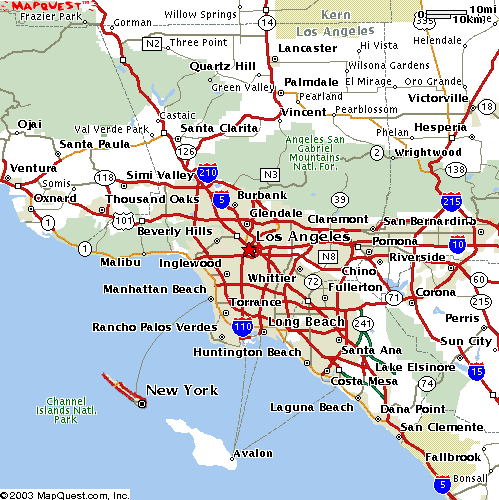
Including this awesome series called "The Errant Isle Of Manhattan" in which the aforementioned island goes on a sightseeing tour (inspired by Rem's epilogue in Delirious NY, natch):


I'd like to see this continued. Maybe New York should go on a European Tour? Visit the Dead Sea? Or maybe enact an epic naval battle against Key West and the Fleet of Venice? Or float North, eventually embedding itself within the seasonal ice in the North Sea, only being freed after decades of global warming?

Kind of reminds me of this Lie-Ins and Tigers drawing: